Bringing you the latest news impacting our network from Congress and the Administration.
In this Edition
Next "Capitol Conversations" Webinar: Housing and ROAD Implementation
Our Network In Action
Help Lead the Conversation in Your State
Reconciliation Advances in House; CR Would Fund Government Through December
LSA Meets with CMS on New Medicaid Payment Models
House Advances Nonprofit Transparency Bills
What We Are Reading
Upcoming Webinar
Capitol Conversations: Housing and ROAD Implementation
📅 August 20 • 1:00 PM ET
Join us on August 20 at 1:00 PM ET to discuss the 21st Century ROAD to Housing Act. Following its passage, efforts will now shift to implementation, starting with HUD and other key stakeholders. We'll also discuss Yes In God's Backyard efforts, including our new policy one-pager.
Featuring: Matt Josephs (LISC) & Senate Banking Committee staff
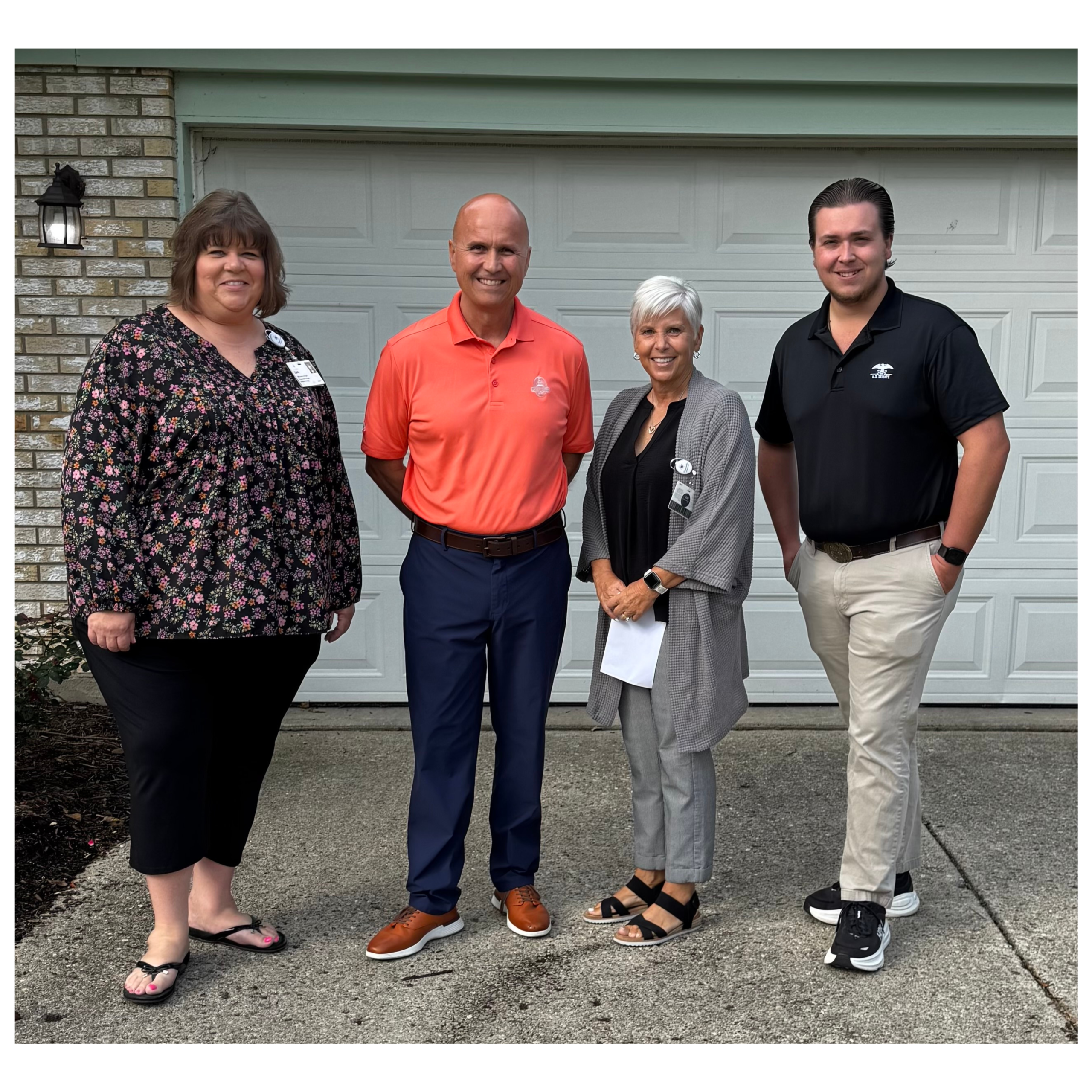
Deb Lyle, Cari Oehlenschlager, and Stephie Childers from Graceworks Enhanced Living in Ohio recently met with members of the staff of Sen. Bernie Moreno (R-OH), including Steve Leary, Southwest Ohio Regional Director, and Hayden Ferguson, Staff Assistant.
→ Following a visit to a residential home and a tour led by a resident, the group visited the Dayton Day Program and discussed the program’s daily operations. Throughout the visit, Graceworks staff highlighted the critical role Medicaid funding plays in supporting the Individual Options Waiver, which funds both the residential and day services, and emphasized our key advocacy message of “no more cuts to Medicaid funding.”
Left to right: Cari, Steve, Deb, and Hayden.
Kelli Dobner, Chief Growth Officer at Samaritas in Michigan, recently published a piece jointly in Crain’s Business Detroit and on Substack to shift the narrative away from nonprofits in moral terms to the economic case.“Nonprofits are often expected to solve increasingly complex social challenges while operating within constraints that no other sector would accept. Yet despite those constraints, they remain indispensable contributors to workforce participation, educational stability, health outcomes, community vitality, and public safety.” Read more here: The Business of Social Impact – Nonprofits are Serious Enterprises (Substack; Crain’s Business Detroit)
Here We Stand.
For People. For Care. For Medicaid.
Ready to lead the conversation in your community? Our Here We Stand resources equip you with the tools, messaging, and insights to advocate with confidence and drive meaningful change with a united faith-based voice. Here are four ways to stand with the people we serve as Medicaid changes take effect — starting with the August recess.
→
Take action in two minutes. Use our turn-key advocacy tool to send a message to your lawmakers urging them not to make further cuts to Medicaid funding.
→
Schedule an in-district meeting. Members of Congress are home during the August recess. Our Action Guide walks you through the ask.
→
Share your impact story. How are Medicaid changes affecting your organization and the people you serve? Share your insights with us.
House Advances Reconciliation Bill; CR Would Fund Government Through December
What's In and out of House Reconciliation 3.0?
Last week, the House approved a budget resolution that serves as an initial framework for a third budget reconciliation bill in Congress and which includes approximately $63 billion in additional defense and intelligence funding, $12 billion for farm relief, and $10 billion for election-related grants.
Notably, the resolution does not currently include instructions for committees with jurisdiction over Medicaid, marking a reprieve for now from any additional Medicaid cuts. It also excludes the nonprofit-related provisions related to "terrorist supporting organizations" that were proposed and struck in last year's H.R. 1 bill.
Now what?
The resolution now heads to the Senate, where its path forward remains uncertain. Several conservative senators continue to push for spending offsets, and Senate leadership has signaled that the House proposal lacks sufficient support. We will continue to provide updates as we learn more.
Government Funding Through December Passes House
The House also passed a continuing resolution (CR) to fund the federal government at current levels through December 4 before departing for the August recess. The Senate intends to remain in session through at least the first week of August.
Bipartisan negotiations on the CR remain active in the Senate, and there is still hope that lawmakers there could reach an agreement before leaving for recess. If the Senate acts, the House would likely take up the measure upon its return.
The Clock is Ticking
The House returns on August 31 and will then be out again during the Labor Day week, while the Senate is not scheduled to return until September 14. As a result, Congress will have only a narrow window to address the CR and other legislative priorities before the midterm elections.
Senate Outlook
For now, Senate Majority Leader Thune has indicated that the Senate will focus on resolving government funding before considering another budget resolution. He has also stated that the House-passed budget framework does not currently have the votes needed to pass the Senate, making pre-election action on reconciliation unlikely but not impossible.
While the immediate prospects for a new reconciliation package appear limited, the situation remains fluid. Changes in Senate dynamics or increased pressure from the White House could quickly alter the outlook, making continued monitoring essential.
Budget Resolution 4.0?
We are also continuing to track the possibility of a fourth budget resolution. Because Fiscal Year 2028 budget resolutions can be considered once Fiscal Year 2027 begins on October 1, Congress could pursue another reconciliation vehicle later this year, potentially creating a new legislative pathway for tax, spending, and other policy priorities, including further funding cuts.
LSA Meets with CMS on New Medicaid Payment Models
Lutheran Services in America staff attended a meeting last week with CMS (Centers for Medicare and Medicaid Services) and CMMI (Center for Medicare and Medicaid Innovation) staff to provide initial input on two new CMS/CMMI Medicaid-related models. The two models in development (LEAD and ASPIRE) aim to improve outcomes while containing costs.
What is LEAD?
LEAD is CMS’s newest ACO-focused model and successor to ACO REACH. It is a 10-year voluntary model scheduled to run from January 1, 2027 through December 31, 2036, and is designed to create a more stable, long-term pathway for accountable care participation.
What is ASPIRE?
ASPIRE is a state-based Medicaid and CHIP model for children and youth up to age 21 who have, or are at risk of developing, complex medical or behavioral health needs. Up to five states will participate in the 10-year model.
Key takeaways
CMS is signaling a stronger push toward prevention, coordination, and whole-person care in both models. Comments from participants in the meeting representing CBOs and SSOs centered on ensuring stronger, more formal payment and partnership structures, so community providers can be compensated for the value they provide. Accordingly, SSO and CBO participation in the models will depend on funding that adequately covers costs, with clear metrics, and more formal accountability for how CBOs are compensated based on actual costs.
Last week, the House Ways and Means Committee voted along party lines to advance three bills that could impact nonprofits.
Fiscal Sponsorship Transparency Act of 2026 (H.R. 9721): Introduced by Rep. Lloyd Smucker (R-PA), the bill would require nonprofits to annually report detailed information on fiscally sponsored projects. It aims to impose significant penalties if the IRS determines an organization failed to exercise appropriate “discretion and control” over sponsored funds, terms that are not defined in the legislation. Critics argue the proposal could discourage nonprofits from serving as fiscal sponsors, a role that helps support a wide range of community-based initiatives.
Foreign Funding Transparency Act (H.R. 9772): Introduced by Rep. David Schweikert (R-AZ),the bill would require most nonprofits to track and annually report donations from foreign nationals, regardless of amount. Nonprofits already report substantial donor information confidentially to the IRS. Opponents contend the new requirements would increase administrative burdens and could discourage charitable giving.
Stopping Foreign Influence in Elections Act of 2026 (H.R. 9771): Introduced by Rep. Nicole Malliotakis (R-NY), the bill would prohibit charitable nonprofits that receive donations from foreign nationals from contributing to a 501(c)(4) social welfare organization for two years. Violations could result in significant penalties, including temporary loss of tax-exempt status. Organizations may need to track the nationality of all donors or forgo certain lawful advocacy activities.
The outlook for these bills remains uncertain, but we will continue monitoring their progress given the potential compliance, reporting, and operational implications for tax-exempt organizations.
What We Are Reading
AI IN HEALTHCARE
Webinar: “State AI Sandboxes: A Regulatory Path Forward for Scaling Health Care AI”.
Speakers discussed the importance of patient safety, clinician oversight, transparency, accountability, real-world evidence, and stakeholder engagement as policymakers consider pathways for responsible innovation.
For more information, please contact Sarah Dobson, Senior Director of Public Policy and Advocacy.
Lutheran Services in America is one of the nation’s largest national networks of health and human service providers with a mission to cultivate caring communities that advance health and opportunity for all. With 300 nonprofit organizations across 1,400 U.S. communities and more than $26 billion in combined annual services, the Lutheran Services in America network advances equitable outcomes for children, youth and families, improves independence and choice for older adults, champions meaningful services and support for people with intellectual and developmental disabilities, and strengthens stability and purpose for veterans and others. Formed in 1997, Lutheran Services in America brings together a network of leaders, partners and funders to catalyze innovation, strengthen organizational capacity and advance public policy.
Copyright (C) 2025 Lutheran Services in America. All rights reserved.
You are receiving this email because you opted in to receive communications from Lutheran Services in America.
Lutheran Services in America 100 Maryland Ave. NE, Ste. 500 Washington, DC 20002